COMSOL Multiphysics Simulation
About Course
COMSOL Multiphysics Simulation Certification
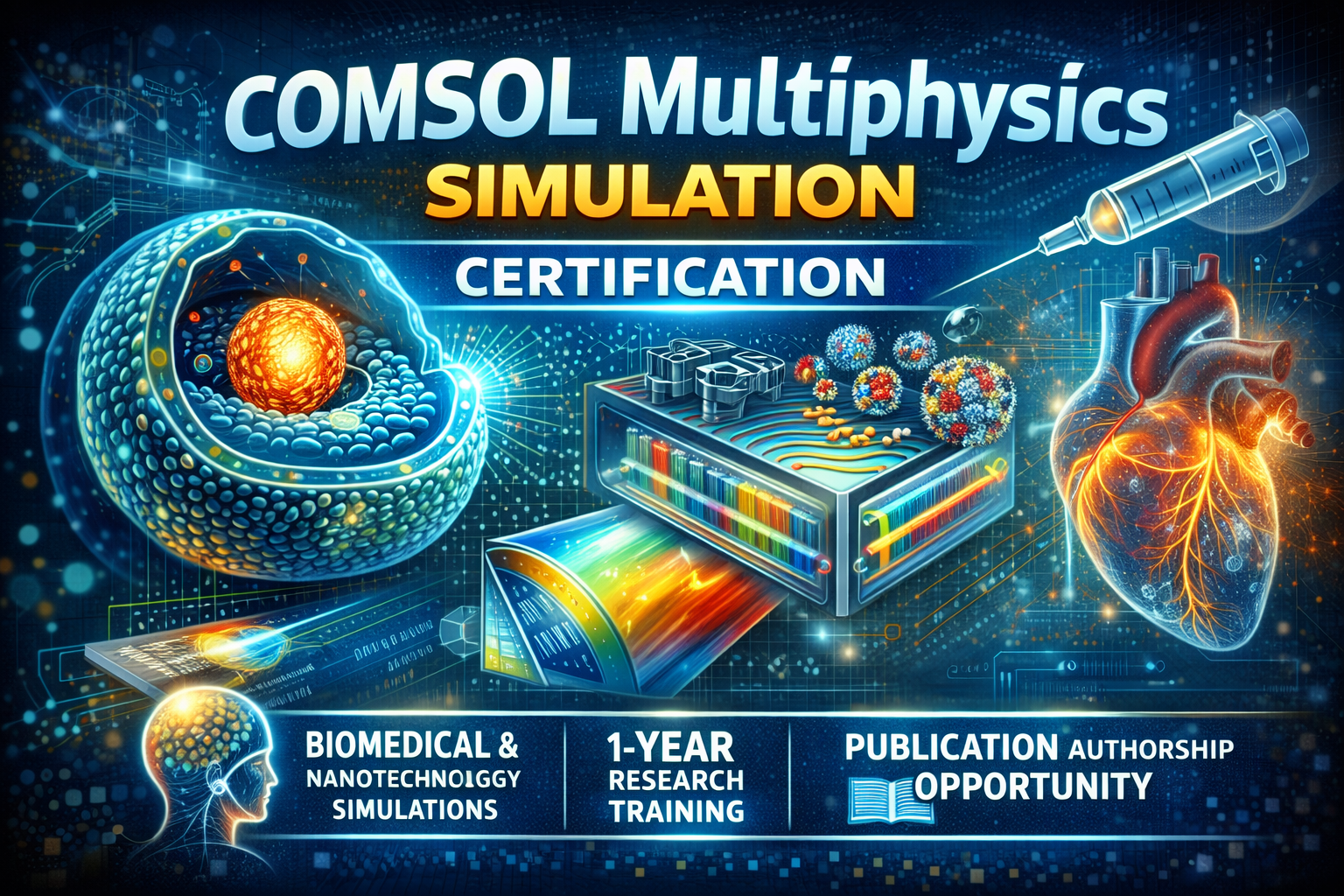
This certification program provides professional training in COMSOL Multiphysics simulation with focus on biomedical engineering, nanotechnology, and life science applications. The course introduces participants to multiphysics modeling techniques used in scientific research, biomedical device development, and nanotechnology simulations.
Course Overview
COMSOL Multiphysics is a powerful simulation platform widely used in scientific research and industrial engineering to model complex physical systems. Researchers use COMSOL to simulate heat transfer, fluid dynamics, diffusion processes, microfluidics, electromagnetic systems, and biological transport phenomena.
This program focuses on applications of COMSOL in nanotechnology, biomedical engineering, and life science research. Participants will learn how to build simulation models, interpret simulation results, and apply multiphysics modeling techniques to research problems involving drug delivery systems, microfluidic devices, and biomedical processes.
Topics Covered
- Introduction to COMSOL Multiphysics – Understanding the simulation environment and modeling workflow.
- Geometry and Model Design – Creating simulation geometries and defining computational domains.
- Physics Interfaces – Understanding different physics modules used in multiphysics simulations.
- Heat Transfer Modeling – Simulation of thermal transport processes.
- Diffusion Modeling – Modeling mass transport and molecular diffusion systems.
- Microfluidics Simulation – Fluid flow modeling for biomedical and nano-scale devices.
- Nanotechnology Applications – Simulation approaches used in nano-material and nano-device research.
- Biomedical Modeling – Modeling biological systems and biomedical device environments.
- Simulation Analysis – Interpreting simulation results and optimizing models.
Research Training Opportunity
This program includes extended research-oriented training in multiphysics simulation. Participants may work on guided simulation projects related to nanotechnology or biomedical applications. Students demonstrating strong performance may also receive opportunities to contribute to research publications based on simulation studies.
Learning Options Available
- Recorded Lectures explaining COMSOL modeling principles and simulation workflows.
- Live Mentoring Sessions for discussion of simulation strategies and modeling techniques.
- Hands-on Simulation Exercises demonstrating practical modeling approaches.
- Structured Study Materials covering simulation methods and modeling concepts.
Certification
Participants who successfully complete the program will receive a professional certification associated with a globally registered company. The certification demonstrates practical knowledge of COMSOL simulation techniques used in research and industrial applications.
Career Opportunities
- Simulation Engineer
- Biomedical Modeling Specialist
- Nanotechnology Research Analyst
- Computational Science Researcher
- Multiphysics Simulation Engineer
Begin Your COMSOL Simulation Training
Enroll in the COMSOL Multiphysics certification program and develop professional simulation skills used in nanotechnology, biomedical engineering, and scientific research.
Enroll in COMSOL Certification |
Student Ratings & Reviews