Bioinformatics Tools
About Course
Bioinformatics Tools Professional Certification
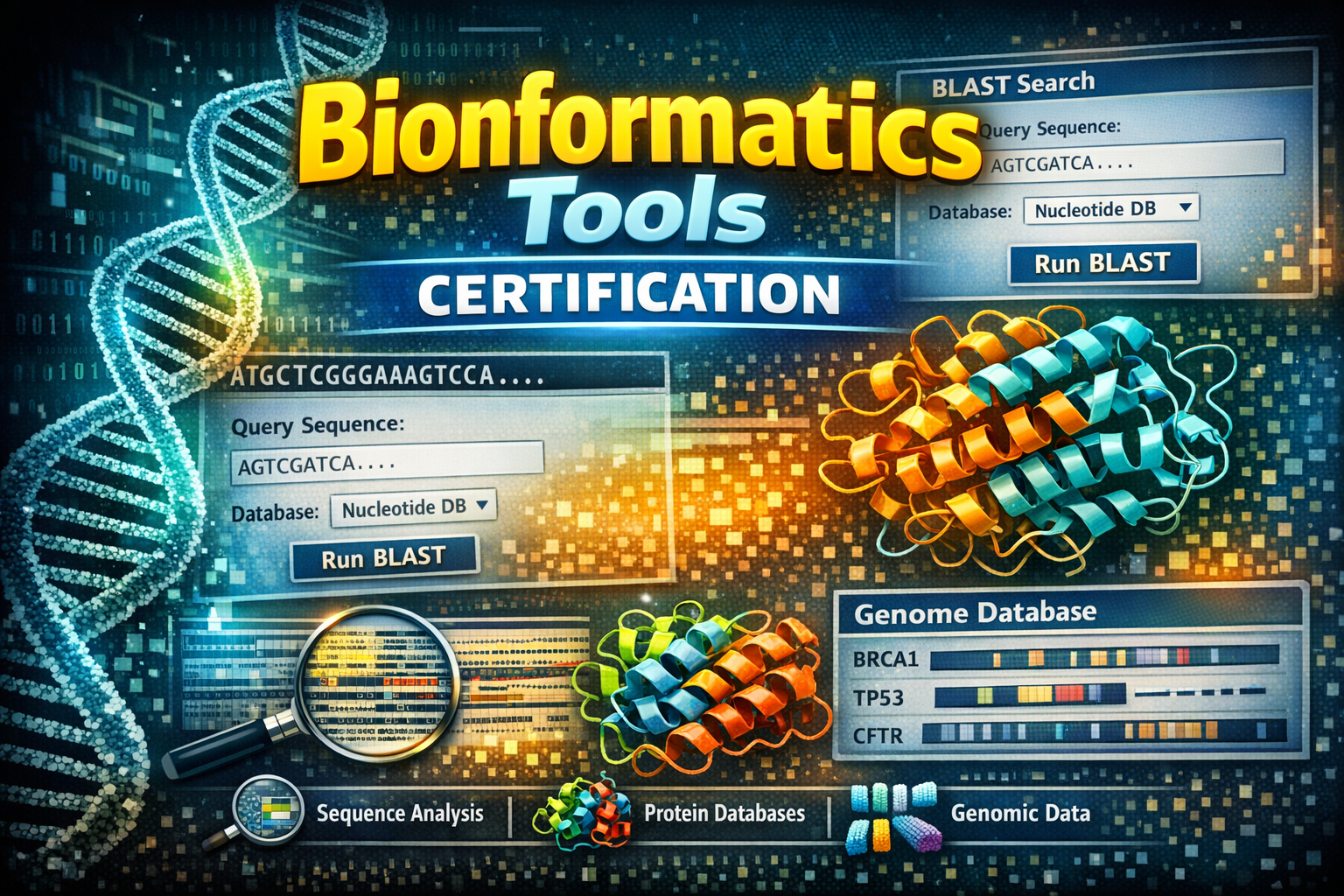
This certification program introduces participants to widely used bioinformatics tools and biological databases used in modern life science research. The course focuses on sequence analysis, genome databases, protein databases, and computational biology tools commonly used in biotechnology, molecular biology, and biomedical research.
Course Overview
Modern biological research relies heavily on computational analysis of biological data. Bioinformatics tools allow researchers to analyze DNA sequences, identify genes, study protein structures, and interpret large genomic datasets. These tools are widely used in biotechnology research, drug discovery, genomics, and biomedical sciences.
This course introduces participants to essential bioinformatics tools and online databases used in life science research. Students will learn how to perform sequence alignment, database searches, genome analysis, and protein sequence analysis using commonly used bioinformatics platforms.
Topics Covered
- Introduction to Bioinformatics – Understanding the role of computational biology in modern research.
- Sequence Analysis – DNA and protein sequence interpretation.
- BLAST Search – Identifying sequence similarities using NCBI BLAST.
- Multiple Sequence Alignment – Using tools like Clustal Omega for sequence comparison.
- Genome Databases – Understanding NCBI, GenBank, and genome data resources.
- Protein Databases – Exploring protein structure and sequence databases.
- Phylogenetic Analysis – Understanding evolutionary relationships using sequence data.
- Biological Data Interpretation – Analyzing results obtained from bioinformatics tools.
Tools Introduced in the Program
- NCBI BLAST
- Clustal Omega
- GenBank Database
- Protein Data Bank (PDB)
- UniProt Database
- Genome Browsers
- Basic sequence analysis platforms
Learning Options Available
- Recorded Lectures explaining bioinformatics concepts and database navigation.
- Live Mentoring Sessions discussing sequence analysis and data interpretation.
- Hands-on Tool Demonstrations showing how to use bioinformatics tools for biological research.
- Structured Study Materials covering computational biology concepts.
Certification
Participants who successfully complete the program will receive a professional certification associated with a globally registered company. The certification demonstrates practical knowledge of bioinformatics tools and biological databases used in modern life science research.
Begin Your Bioinformatics Training
Enroll in the Bioinformatics Tools certification program and develop practical skills used in computational biology and modern life science research.
Enroll in Bioinformatics Certification |
Student Ratings & Reviews